Work05GlidePower

GlidePower

USB-C charging for electric scooters.

When
Jan 2025 · Christchurch
Type
Personal product, working prototype
Input
Any USB-C PD charger, 65 to 100 W
Output
42 V to the scooter’s charge port
Inside
USB-C PD trigger · step-up converter · filtering · fuses
Enclosure
Designed and printed at home
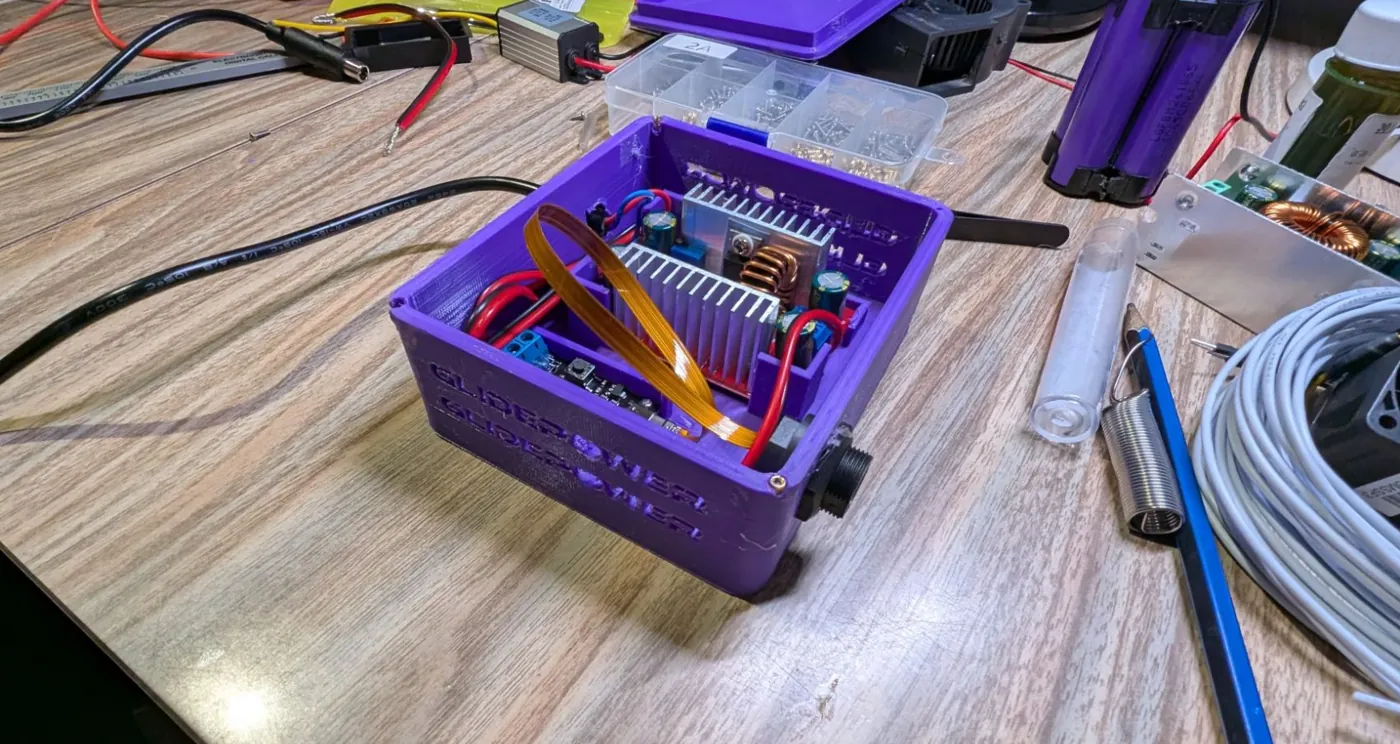
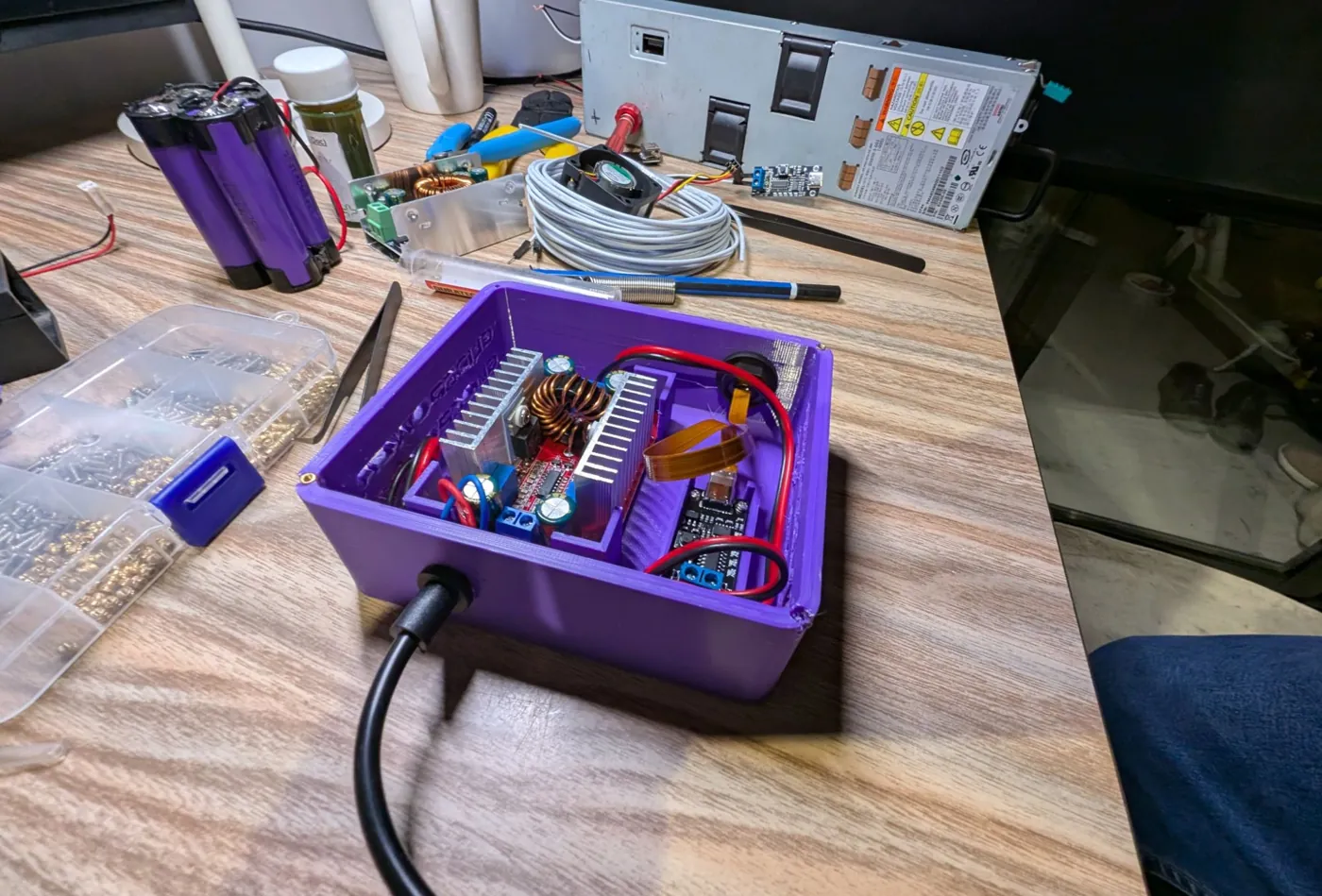
The GlidePower box open on the bench, showing the heatsinked converter board and the USB-C trigger board, with a fan, battery cells and a multimeter around it
Plate 01 · The box, open · Christchurch · Jan 2025

01 · Problem

Two chargers in the bag. One of them a brick.

I rode an electric scooter to school. Its charger was heavy and bulky, and I was already carrying the charger for my Mac. Leave the scooter charger at home and I was stuck; carry both and my bag was half chargers.

Then I looked at what the scooter actually draws while charging: 60 to 120 W. My laptop charger does 100 W over USB-C. The phone, the watch and the headphones already charge from it. Why not the scooter?

02 · Idea

Ask the charger for 20 V, then step it up.

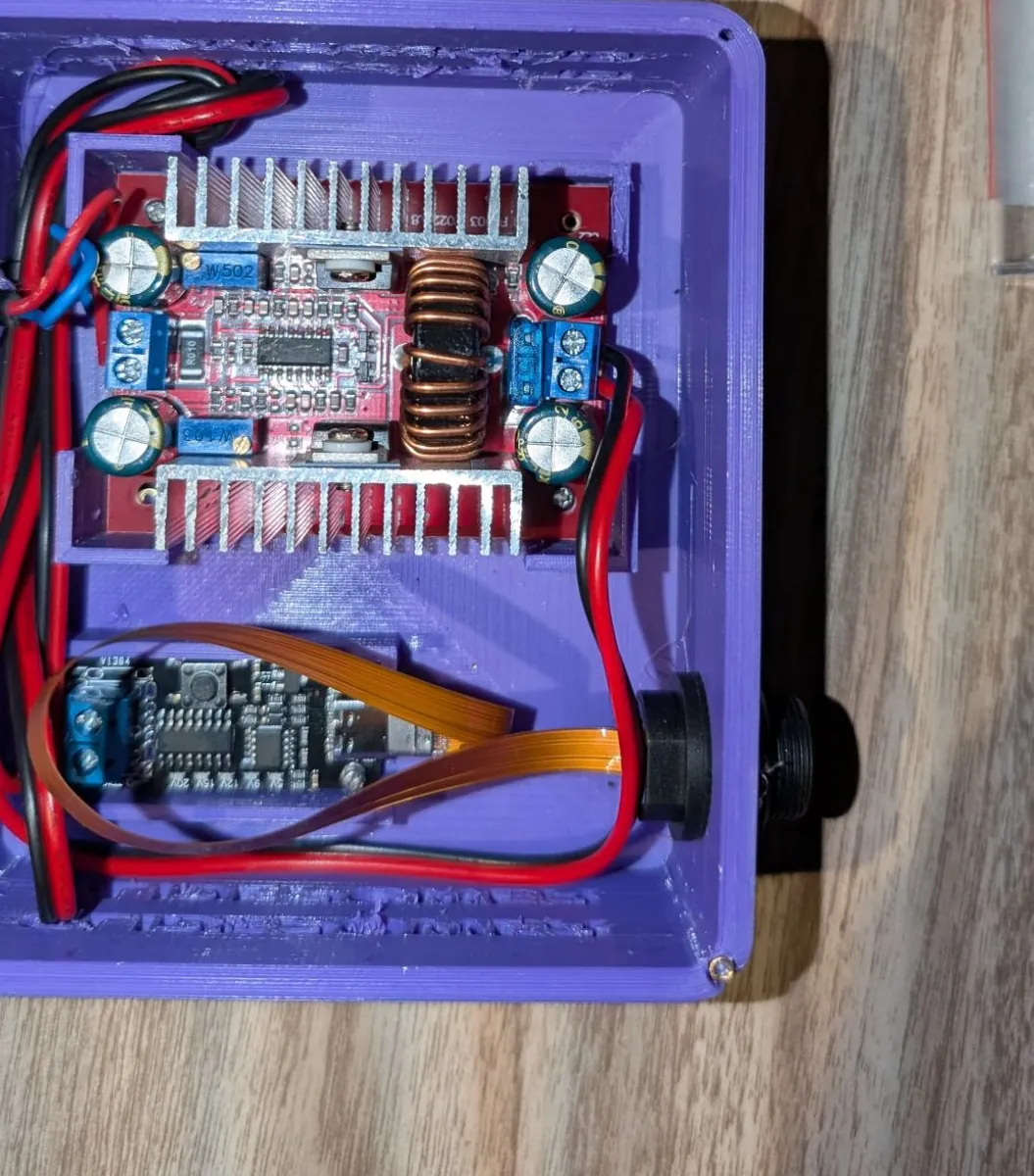
USB-C Power Delivery can hand over 20 V, but the scooter’s pack charges at 42 V. So the box does two things: a small trigger board negotiates 20 V from whatever USB-C charger is plugged in, and a step-up converter turns that into 42 V for the scooter’s charge port.

Around those two boards: filtering capacitors, because the converter switches at high frequency and the scooter’s battery management system deserves clean power, and fuses on both sides.

Why not just a bigger battery bank?

On paper: a power bank with a barrel jack would also work.

MineI didn’t want another thing to charge. The point was one charger for everything, and USB-C PD already carries the power. All the box has to do is change the voltage.

Why a step-up and not a custom supply?

On paper: a purpose-built 42 V supply would be neater.

MineOff-the-shelf boards let me test the idea in a week. The smaller step-up module turned out to work as well as the big one; it just runs hotter, which is a cooling problem, not an electronics problem.

03 · Build

Boards, a box, a name on the side.

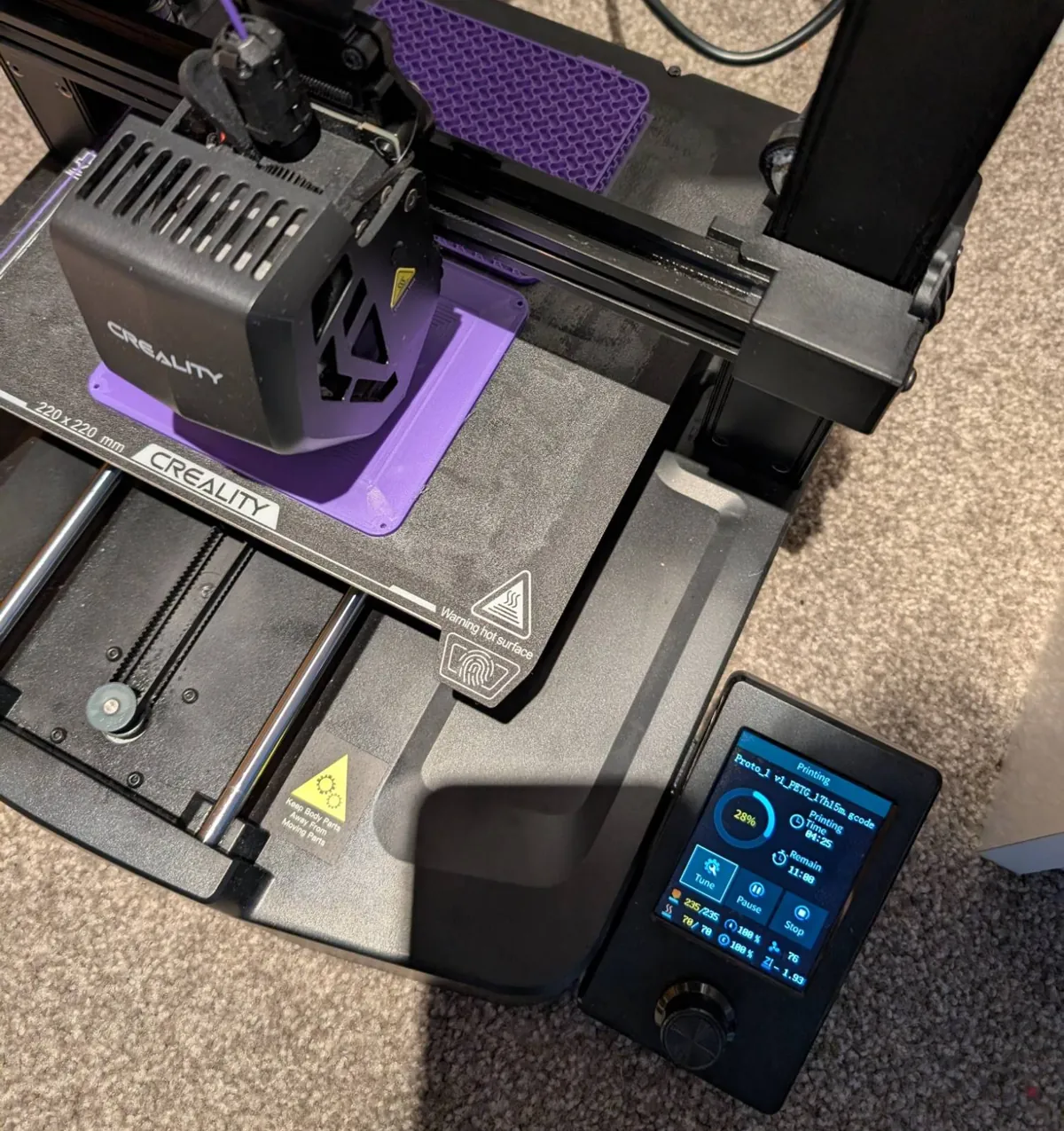
Bench first: converter set to the right voltage, multimeter on the output, a 100 W Apple charger and then a 65 W one. Both worked. Then a box for it, drawn to fit the two boards and their heatsinks, printed in PETG on the Ender 3 at home, with the name cut into the side.

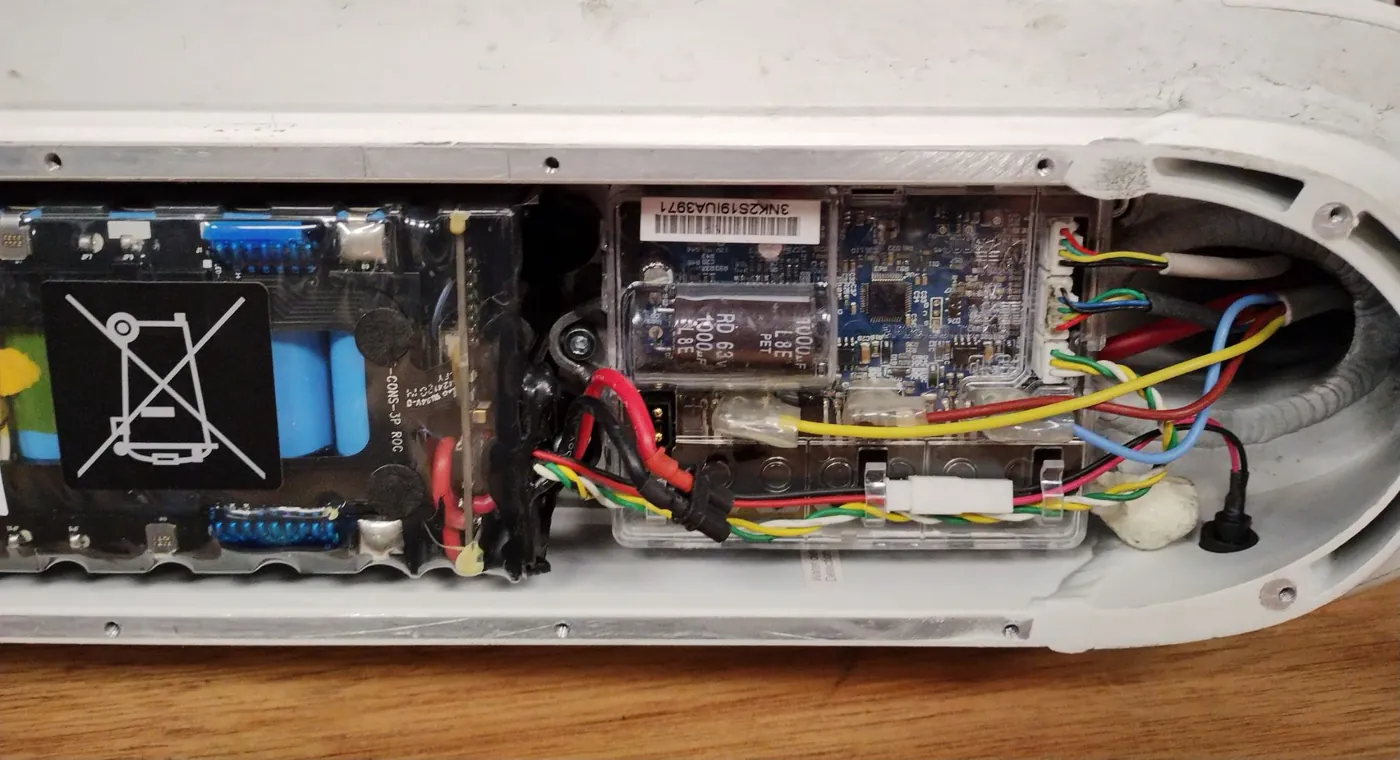
The scooter’s deck opened up, showing the battery pack, the controller board and the wiring
Plate 02 · Inside the scooter first: pack, controller, charge port
A purple enclosure being printed on a Creality printer, with the screen reading Proto_1 v1 PETG
Plate 03 · Proto_1 v1, PETG, 17 hours
Plate 04 · Printing the base
Inside the purple box: the red step-up converter with two heatsinks and a toroid, the USB-C trigger board on a ribbon cable, and the output jack
Plate 05 · Step-up converter above, USB-C trigger below
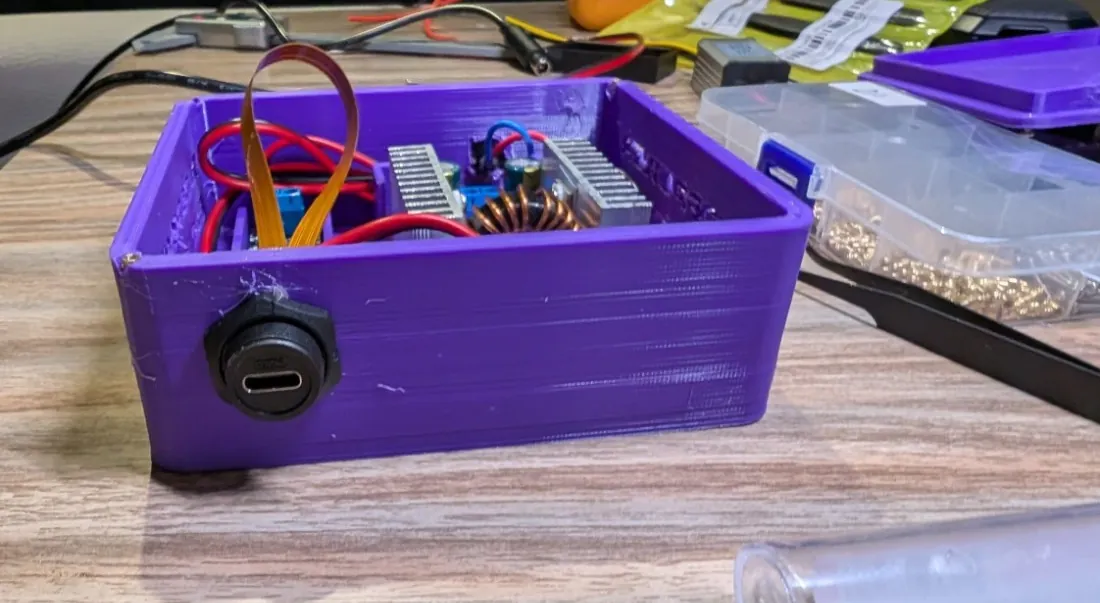
The USB-C socket mounted through the side of the printed box
Plate 06 · The only input: USB-C
Side of the printed box with GLIDEPOWER cut through the wall in two rows
Plate 07 · GlidePower, cut into the wall

04 · What broke

I set it to 48 V. The scooter charges at 42.

First test, I dialled the converter to 48 V, because that’s the nominal voltage of the pack, and plugged it into the scooter. It pulled 96 W and kept pulling. Nothing caught fire, and I’m still glad about that. Then I read the label on the original charger: 42 V. Reset it, and the current sat at 1.7 A and never went above it. The battery was already at 95%, which helped.

Two smaller ones. A 1000 µF capacitor on the output stopped the PD trigger from starting at all, because the inrush to charge it looked like a short; the fix is a resistor and a diode to limit that first surge. And the 65 W charger refused to start once the box was assembled, which the 100 W one didn’t.
05 · Result

One charger in the bag.

The scooter charges from the same USB-C charger as the laptop. The heavy brick stayed at home.

Plate 08 · Charging from USB-C · 16 Jan 2025

06 · Today

What I’d do differently now.

Cooling. The converter needs a fan running the whole time, and the plan was a heat pipe from inside the box to a passive heatsink on the outside, so the enclosure stays sealed. And I’d never set an output voltage from memory again. Read the label first.

I also wanted to open-source it and make a video. I moved to India before either happened.

§ End Status Power on

Still building

The projects got bigger. The curiosity didn’t.

Email me